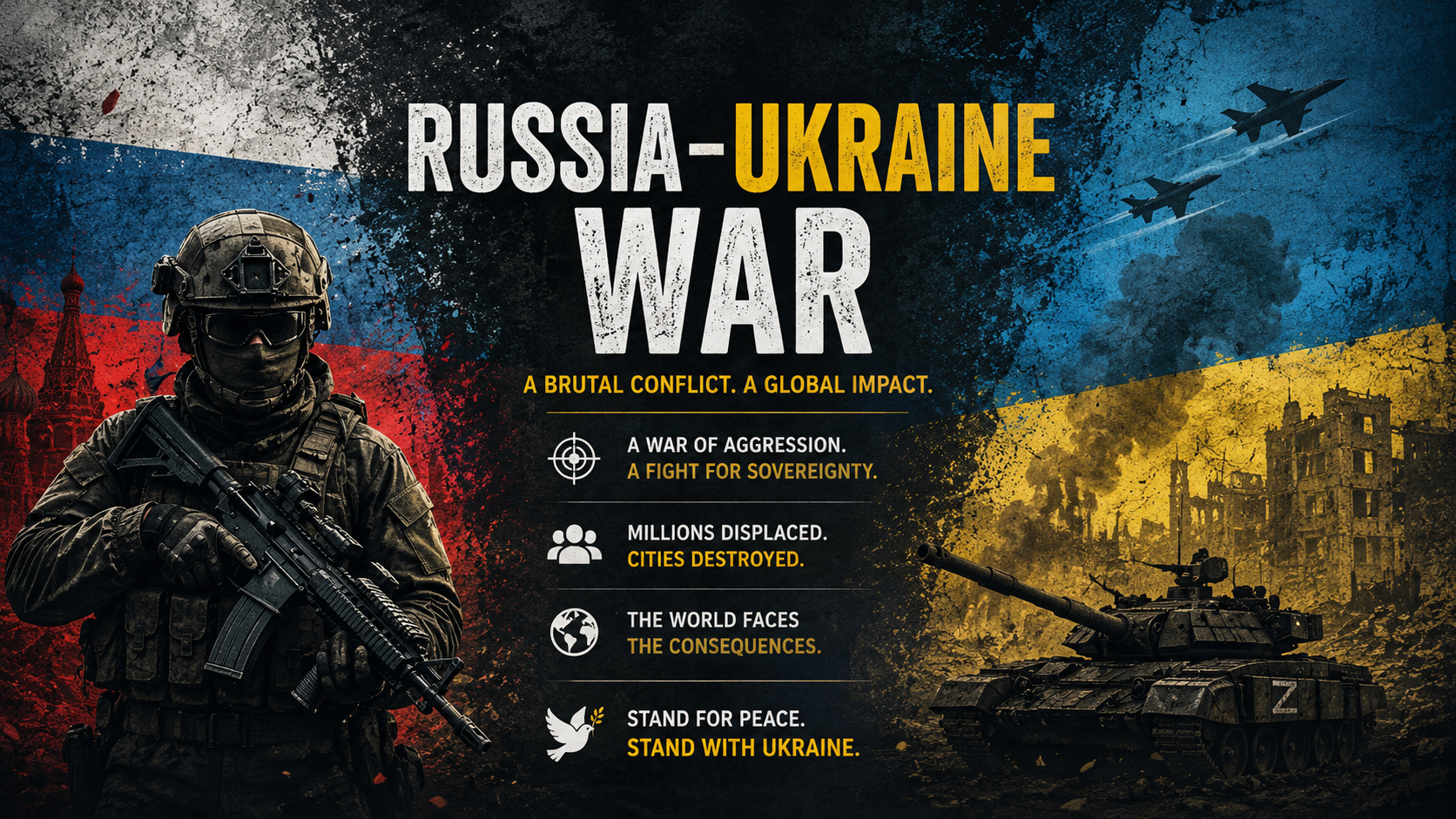
It is difficult to imagine that, for almost a decade, the separatist movement in eastern Ukraine, the annexation of Crimea by Russia, and the mass naturalization of Ukrainian citizens by the Russian Federation were not recognized in Europe as clear indicators of an emerging territorial expansionist policy. Indeed, all evidence suggests that in 2014 the Organization for Security and Co-operation in Europe (OSCE) may have unintentionally produced the opposite of the peace it sought to consolidate through the Minsk Agreements, which were intended to end the war in the Donbas. Those agreements significantly compromised Ukraine's territorial integrity.
This raises the possibility that European intervention left open a strategic opportunity that Russia would later exploit to justify a military response against any attempt by Ukraine to reestablish control over the self-proclaimed independent regions. That scenario ultimately culminated in the military operation launched on February 24, 2022.
The political and cultural complexity of post-Soviet Ukraine has always been a decisive factor in the definition of its domestic politics. The election of the nationalist Viktor Yushchenko during the turbulent 2004 presidential elections appeared to promise a break with the legacy of the Soviet system. However, the polarization that followed demonstrated the fragility of Ukraine's political landscape, a reality that generated considerable concern in Western capitals.
The 2010 election of Viktor Yanukovych confirmed this instability while temporarily distancing Ukraine from integration into the European Union and effectively keeping NATO's "open door" policy closed.
Despite Ukraine's relative political distance from Western Europe during this period, external forces acting upon the country continued to intensify the instability of a nation already struggling with internal challenges related to national identity, territorial autonomy, and an incomplete process of democratic consolidation.
Within this broader context emerged the events of Euromaidan and, almost simultaneously—with significant Russian influence—the self-proclamation of the Donetsk People's Republic (DPR) and the Luhansk People's Republic (LPR), both of which became the central axis of the ongoing war.
The external actors involved in these developments form an essential component of Russian foreign policy. Understanding how these strategic frameworks evolved—particularly their cultural dimensions—is fundamental to understanding the dynamics of the conflict itself.
The new Russian Foreign Policy
The 2008 Russian Foreign Policy Concept identifies the elements that marked the transition from the immediate post-Soviet period to the emergence of the Russian Federation as a twenty-first-century actor across every major sphere of the international system.
Regional security and stability, together with the preservation and strengthening of Russia's territorial integrity, were intended to support the country's projection as a major economic actor in global markets. At the same time, the doctrine reaffirmed Russia's commitment to international law, emphasizing the fundamental principles of the Westphalian system.
According to this new doctrine, and while asserting its adherence to the Charter of the United Nations, Russia places particular emphasis on defending—by every available means—the rights and interests of Russian citizens both inside and outside its borders. It also prioritizes the promotion of Russian culture abroad.
This represents the critical turning point at which the concepts of identity and cultural values become central elements of modern geopolitics, making them indispensable to any strategic analysis of the war in Ukraine.
Russian Foreign Policy towards NATO
The first wave of NATO enlargement in 1998 reaffirmed the Atlantic Alliance's strategic posture, which, from the Kremlin's perspective, has remained essentially unchanged since the organization's founding in 1949. From a realist standpoint in international politics, Russia responded by developing new and more proactive strategies designed to preserve its regional status quo.
The second wave of NATO enlargement in 2004 brought nine additional Eastern European countries into the Alliance's sphere of influence. Russia's response was neither immediate nor directed toward Western Europe. Instead, Moscow focused on strengthening its influence across the Eurasian periphery by reinforcing the Collective Security Treaty Organization (CSTO), seeking to consolidate a regional security structure capable of counterbalancing NATO's continued expansion.
An important precedent for Russia's operational approach in Ukraine can be found in its longstanding support for separatist movements in Georgia and its recognition of South Ossetia and Abkhazia as independent entities in 2008. These events preceded Russia's military intervention in Georgia and illustrated the double-edged nature of the principle of national self-determination.
Coincidentally, 2008 was also the year in which Kosovo declared its independence from Serbia—Russia's principal ally in the Balkans. During this same period, Moscow began redefining the guiding principles of its foreign policy, incorporating increasingly significant cultural and civilizational elements into its geopolitical strategy.
This cultural dimension, intended to distinguish Russia from the West, does not necessarily imply the rejection of NATO as an important geopolitical actor. On the contrary, cooperation with the Alliance on matters of regional security, international crises, and global terrorism remains essential for maintaining stability—particularly in Europe.
Nevertheless, Russia has consistently opposed NATO's eastward expansion and has repeatedly warned of the need for strategic containment measures. According to Moscow, these concerns have not been adequately addressed, particularly regarding Ukraine.
Despite these opposing positions, both NATO and Russia have continued to expand their respective spheres of influence through different mechanisms and at different speeds, with the United States inevitably playing a decisive role.
Although NATO functions as a collective military alliance, its decision-making process involves consultation among all member states. Even so, the United States remains the Alliance's dominant actor, possessing the political influence necessary to shape both NATO policy and broader Western strategy toward Russia.
For this reason, Russian analyst Sergei Kortunov argues that Russia's relationship with NATO is, above all, a relationship with the United States.
Russian Foreign Policy as an actor in the European energy market
The enduring strategic principles inherited from the Cold War—which gave birth to NATO through the Washington Treaty—continue to influence European security today. They reflect Lord Hastings Ismay's famous doctrine of "keeping the Americans in, the Russians out, and the Germans down," illustrating the persistent geopolitical competition between Russia and the United States on the European continent.
The United States anticipated decades ago that Russia's growing influence in Europe's energy market would eventually become a strategic challenge. However, repeated attempts to develop and implement effective policies aimed at limiting Russian influence have largely failed and, in some cases, have even produced counterproductive results.
Washington has faced the difficult task of reducing Europe's dependence on Russian energy while simultaneously presenting viable alternatives. Initiatives such as the Nabucco pipeline, efforts to expand liquefied natural gas (LNG) exports to Europe, and sanctions imposed against the Nord Stream 2 pipeline in 2021 all sought to weaken Russia's position.
Those measures ultimately failed to provide Europe with a practical substitute for Russian energy supplies.
The war in Ukraine, however, appeared to create the first genuine opportunity to accelerate Europe's energy decoupling from Russia, although relatively little attention was initially given to the enormous economic costs associated with such a transformation.
As sanctions against Russia were expanded, European governments found themselves confronting difficult strategic and economic dilemmas. Germany's suspension of Nord Stream 2 certification—a project that would have doubled Russian gas exports to Germany—demonstrated both the influence of international political pressure and the importance of public opinion in shaping policy decisions in Berlin.
Yet this decision also forced Europe to reconsider its long-term energy strategy.
At the time, approximately 40 percent of all natural gas consumed in Europe originated in Russia, while Germany depended on Russian supplies for nearly 65 percent of its gas consumption. Consequently, sanctions risked producing significant unintended consequences, including rising energy prices, increased inflation, and a higher cost of living for ordinary European citizens.
Such economic pressures were particularly dangerous for democratic governments that remain highly sensitive to public opinion.
In this sense, sanctions imposed on Russia were also, indirectly, sanctions imposed upon Europe itself. They were introduced at a time when realistic alternative sources of energy simply did not yet exist.
The decisive escalation occurred not merely with Russia's intervention in the Donbas—which many analysts had already anticipated—but rather with Moscow's unexpected advance across virtually the entirety of Ukraine. This dramatically intensified fears throughout Europe, particularly among countries that had once belonged to the Soviet sphere of influence.
The United States likewise imposed sanctions on Russian oil and natural gas imports. Meanwhile, as energy prices surged across North America, an increasingly unpopular U.S. administration sought to mitigate the crisis by exploring renewed relations with governments it had previously identified as adversaries, including Nicolás Maduro's regime in Venezuela.
The article describes this development as a profound contradiction that stands in tension with Henry Kissinger's traditional principles of international relations.
The cultural character of Russian Foreign Policy
As the distance between Russia and the West narrowed while Russian forces advanced into Ukraine, concerns intensified over the possibility that the conflict could evolve into a continental war from which no participant would emerge victorious. Russia shares these concerns.
At the same time, Moscow seeks to consolidate a strategic gray zone between Russia and Europe in order to prevent the close proximity described above. In doing so, it aims to halt NATO's next stage of expansion while slowing what it perceives as the progressive Westernization of Russia itself—a process that, according to this analysis, has been unfolding gradually for decades as a consequence of globalization and the increasing interdependence characteristic of the contemporary international system.
Cultural change concerns the Russian government more than the deployment of missile defense systems along its borders because the Westernization of society's value system could undermine traditional models of governance, deepen crises of political legitimacy, and ultimately create social movements capable of transforming the political system—and therefore the government—either through institutional mechanisms or by force.
For this reason, Ukraine is strategically important. The principal challenge, however, is time.
Russia's military campaign in Ukraine has evolved into a tactical and strategic nightmare for its armed forces, particularly because much of the fighting has taken place in densely populated urban environments. The experiences of Stalingrad and, more recently, Chechnya demonstrate that urban warfare can become prolonged and extraordinarily costly.
Consequently, this war could continue far longer than Moscow originally anticipated unless the parties—whose positions remain largely irreconcilable—reach a negotiated settlement.
Whatever the terms of such an agreement might ultimately be, Ukraine would almost certainly emerge from the conflict in an extremely vulnerable position politically, economically, socially, and territorially.
From this perspective, a strategy based on exhausting Russia through a prolonged war—one that is almost certainly unsustainable over the long term—will inevitably produce catastrophic humanitarian consequences that are already becoming increasingly visible.
International military assistance to Ukraine has, to some extent, become a strategic dead end. While such assistance has strengthened Ukrainian resistance and slowed Russia's advance, it cannot guarantee direct military intervention for obvious political and strategic reasons.
Every resistance movement has a breaking point.
When Ukraine eventually reaches that point, the response of the West will largely determine not only the future of Ukraine itself but also the broader security architecture of Europe and the strategic calculations of other regions observing the conflict with growing concern.
Likewise, relying on economic sanctions as the principal mechanism for provoking political change within Russia is both imprudent and unrealistic.
It is imprudent because sanctions primarily affect ordinary Russian citizens rather than the political leadership. The economic consequences have been immediate and severe, inflicting significant hardship on Russian society while reinforcing domestic narratives that portray Russia as the victim of Western hostility—a narrative that the Kremlin has used, in part, to justify the war in Ukraine.
It is also unrealistic because historical experience demonstrates that comprehensive and prolonged sanctions imposed on authoritarian governments rarely succeed in producing regime change or meaningful transformations in their political systems.
The military intervention undertaken by Russia should therefore be examined with objectivity and critical analysis.
According to this article, Western policy has frequently been distorted by a characteristic ethnocentrism that limits its ability to understand geopolitical realities from the perspective of its strategic adversaries.
A more comprehensive understanding of regional geopolitics—and particularly of Russian foreign policy—might have made it possible to anticipate the developments that ultimately led to the war in Ukraine.
Such foresight, the article concludes, may have prevented not only this conflict but many others as well.
AFDES publishes independent research and strategic analysis on democracy, governance, public policy, international affairs, and civic institutions.