The integrity of elections is a cornerstone of democracy.
Traditionally, electoral fraud has been understood primarily as the manipulation of ballots, the use of illicit financial resources, or the alteration of results during vote counting and scrutiny. However, the political and technological realities of the 21st century have transformed the nature of electoral interference.
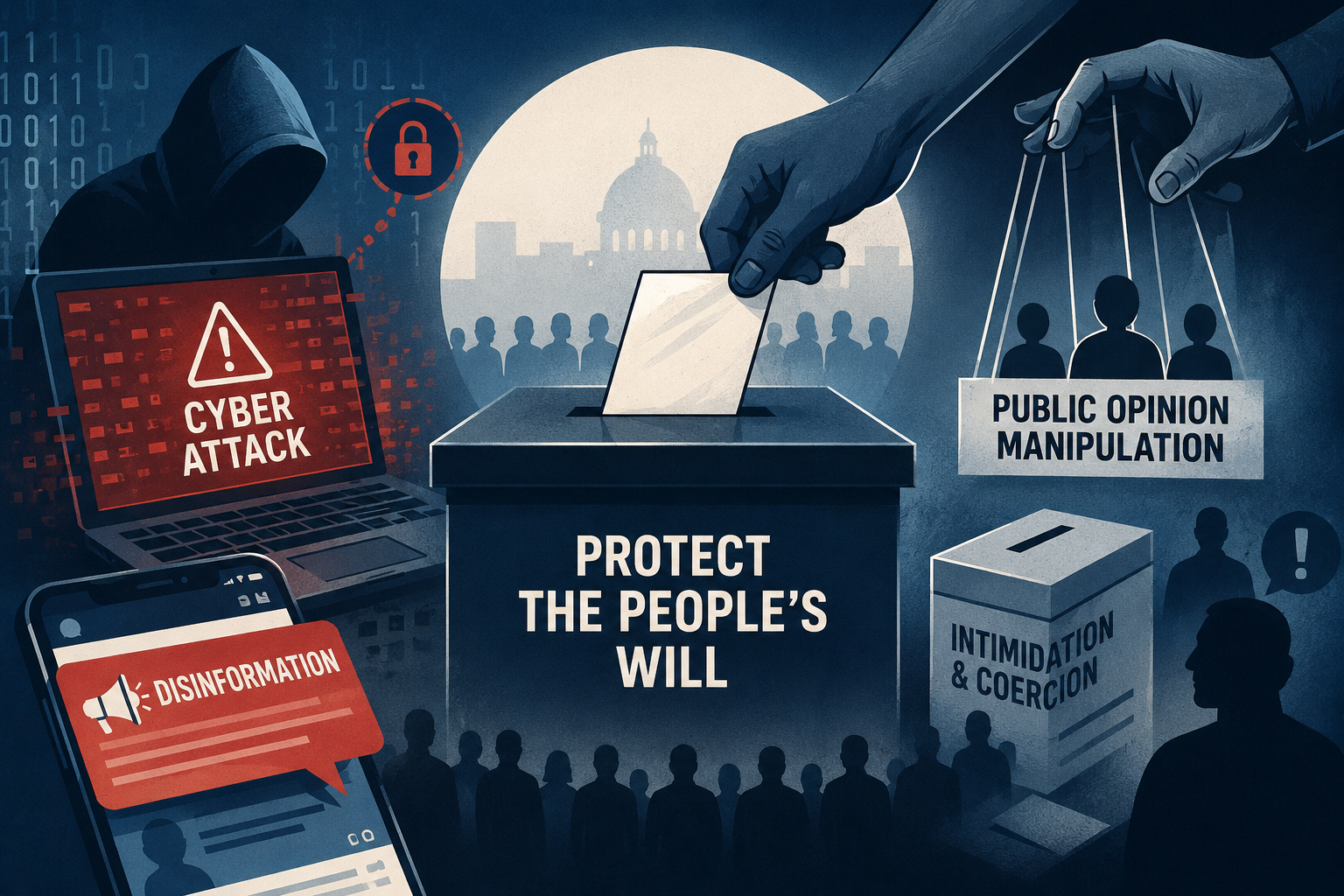
Today, democracies face increasingly sophisticated threats. The massive influence of social media, cyberattacks against electoral infrastructure, foreign interference, digital intimidation, and coordinated disinformation campaigns have created new methods of manipulating and distorting the popular will.
These developments compel us to recognize that the traditional understanding of electoral fraud is too limited to encompass the threats confronting modern electoral systems.
It is therefore urgent to reconsider and expand the concept of electoral fraud—not only to properly identify new forms of manipulation, but also to develop more effective mechanisms for their detection, prevention, and punishment.
Emerging Threats to Electoral Integrity
Among the most significant electoral threats of the 21st century are:
Foreign and Geopolitical Interference
States, foreign governments, state-sponsored organizations, and other influential actors may intervene in electoral processes to advance geopolitical objectives or weaken democratic institutions.
Such interference may include covert financing, influence operations, cyberattacks, propaganda, or coordinated efforts to favor or discredit particular candidates and political movements.
Coercion and Digital Intimidation
Coercion is no longer limited to physical threats at polling locations.
Voters, candidates, election officials, journalists, and political activists may be subjected to online harassment, intimidation, surveillance, threats, or the abusive use of personal information.
These practices can discourage political participation, silence opposing voices, and influence electoral behavior.
Manipulation of Public Opinion
Suspicious or deliberately misleading opinion polls, coordinated disinformation campaigns, fabricated narratives, and manipulated digital content can influence voters long before they enter a polling place.
These strategies seek to alter the voter’s perception of candidates, institutions, and the legitimacy of the electoral process itself.
Digital Interference
Cyberattacks can target voter-registration systems, electoral databases, communication networks, political organizations, and vote-reporting infrastructure.
Malicious software may also be used to disrupt electoral operations or create uncertainty about the accuracy and credibility of the results.
Even when an attack does not successfully alter the final count, it can damage public confidence in the election.
The Limitations of the Traditional Definition
The conventional concept of electoral fraud focuses largely on the direct or physical manipulation of votes, voting machines, ballots, or vote totals on election day.
In the current political and technological environment, that definition has become increasingly narrow and outdated.
It overlooks vulnerabilities that can arise throughout the entire electoral cycle. It also underestimates intentional actions that may not directly alter a ballot but can nevertheless distort the popular will and damage the legitimacy of the democratic process.
The traditional approach concentrates on what happens to the vote itself. It frequently fails to consider how manipulation occurs, when it begins, and how long-term influence operations can shape an electoral outcome.
An election can be compromised before the first ballot is cast.
Failure to recognize these emerging forms of manipulation creates gaps in laws, regulations, and electoral safeguards. These gaps allow unethical political operators, foreign actors, private organizations, and public officials to interfere with elections while avoiding responsibility.
The result is a gradual erosion of citizens’ confidence in democratic government.
A Broader Definition of Electoral Fraud
A conceptual review is necessary—one that reflects the changing reality of electoral manipulation and provides institutions with a stronger framework for protecting electoral integrity.
The dangers facing democratic elections have moved beyond the traditional boundaries of fraud.
In response to this changing environment, I propose an updated definition of electoral fraud. I first presented this concept during a press conference in Ecuador in 2017, when the increasing complexity of electoral interference already demonstrated the need for a more comprehensive approach.
That need has now become indispensable.
Electoral interference should include not only direct actions that alter ballots or election results, but also less visible—and no less harmful—practices intended to manipulate the popular will or undermine public confidence in the democratic process.
I therefore propose defining electoral fraud as:
Everything that is done or deliberately not done before, during, or after an electoral process with the purpose of modifying, changing, or misrepresenting the will of the voter.
This definition substantially broadens the scope of electoral fraud and recognizes three essential components.
Action and Deliberate Omission
Fraud can occur through a deliberate action, but it can also occur through the intentional failure to perform an action that was legally, institutionally, or ethically required.
Election authorities, public institutions, political organizations, technology providers, and other responsible actors may compromise an election not only through what they do, but also through what they knowingly fail to do.
Deliberate inaction may include:
- Failing to investigate documented irregularities.
- Refusing to enforce electoral laws.
- Ignoring unlawful campaign financing.
- Failing to protect voter information.
- Withholding necessary electoral information.
- Neglecting cybersecurity warnings.
- Allowing intimidation or disinformation to continue without an adequate institutional response.
When an omission is intentional and is designed to affect the electoral process, it should be treated as a potential form of fraud.
The Entire Electoral Cycle
Electoral fraud should not be limited to election day or the counting of ballots.
It can occur during voter registration, candidate qualification, campaign financing, access to the media, political advertising, the administration of voting systems, the reporting of results, electoral litigation, recounts, certification, and the transfer of power.
A modern definition must therefore cover the entire electoral cycle—from its earliest preparations to the final certification and consolidation of the results.
Distortion of the Voter’s Will
The defining characteristic of electoral fraud should be its objective: the distortion or misrepresentation of the voter’s will.
The method used is secondary.
This approach allows electoral systems to recognize forms of manipulation that do not involve the physical alteration of ballots but may produce an equally destructive effect on democracy.
Disinformation, intimidation, cyber interference, institutional obstruction, manipulation of electoral rules, and deliberate administrative omissions may all undermine the voter’s ability to make a free and informed choice.
An Urgent Democratic Challenge
The conventional concept of electoral fraud has not evolved at the same pace as technology, political communication, and modern strategies of manipulation.
This conceptual anachronism leaves democratic systems vulnerable to increasingly sophisticated methods of interference.
Electoral integrity cannot be protected using definitions designed exclusively for the political and technological realities of the past.
Experts, electoral authorities, lawmakers, civil-society organizations, technology specialists, and democratic institutions must work together to close the gaps in our legal and conceptual frameworks.
This is an urgent invitation to discussion and collective action.
Free and fair elections require more than accurate vote counting. They require an electoral environment in which citizens can form and express their political will without coercion, deception, unlawful interference, or deliberate institutional obstruction.
Protecting that freedom must become a central priority for democracies around the world.
AFDES publishes independent research and strategic analysis on democracy, governance, public policy, international affairs, and civic institutions.